
Branding
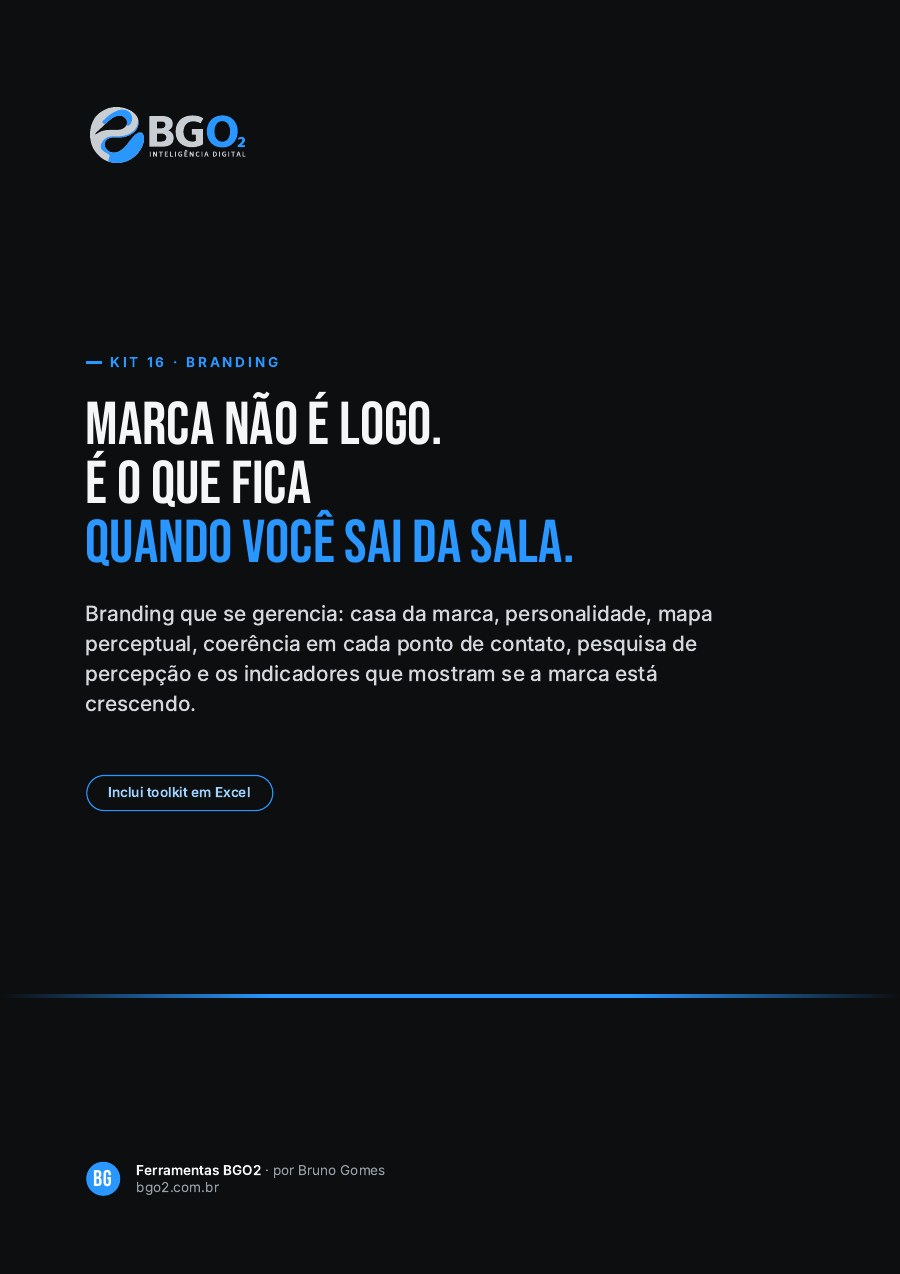
A brand is not a logo. It is what customers say when you leave the room.
How to build a brand buyers recognize, understand, and choose: purpose, positioning, promise, and the alignment between what you say and what you deliver.
PDF guide (22 pages) + Excel spreadsheet · Free
The guide and spreadsheet are currently in Portuguese.
Who it is for
- You cannot explain in a single sentence why buyers should choose you.
- Customers describe your company in completely different ways.
- You only close deals by discounting.
- Every channel tells a different story.
- What the ad promises isn't what the customer experiences.
What you get
The PDF guide
A 22-page PDF guide featuring an end-to-end practical example: Architecture · Brand House · Personality · Perceptual Map · Consistency · Perception · Metrics & Ritual. Concludes with a one-page summary example, common mistakes, a glossary, and a first-days checklist.
The Excel spreadsheet
An Excel spreadsheet with 7 connected tabs, pre-filled with an example (Ervá Cosméticos Naturais, vegan cosmetics with Brazilian ingredients): Brand House · Personality · Perceptual Map · Consistency · Perception · Metrics · Dashboard. Simply replace the highlighted yellow numbers with your own, and the rest calculates automatically, complete with green, yellow, and red status indicators.
How to use it
- 1
Build your brand house
purpose, positioning, promise, and personality.
- 2
Run the consistency test
compare what the brand promises with what the customer experiences at every touchpoint.
- 3
Track your brand metrics
branded search volume, preference, and realized pricing.
What changes in your business
A clear brand reduces price competition, makes paid media more efficient, and helps customers understand why they should choose you.
Frequently asked questions
Is branding just a logo and visual identity?
No. Visual identity is just what's visible on the surface. Branding is the meaning customers associate with your business: what it promises and delivers.
What is positioning?
It's the space your brand wants to occupy in the customer's mind: who it is for, what problem it solves, and why it is different.
How do you measure a brand?
Through branded search volume, recall, preference, referrals, and the ability to sell without relying on discounts.
Other tools on this front
Free material
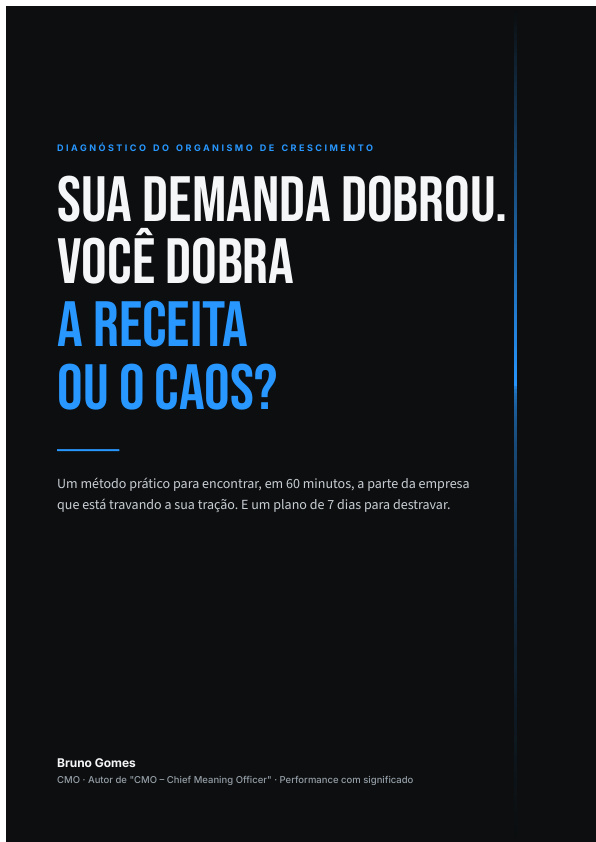
Where does your growth stall?
A practical 60-minute diagnostic to run with your leadership team. Walk away with your bottleneck, the evidence, and a 7-day plan.